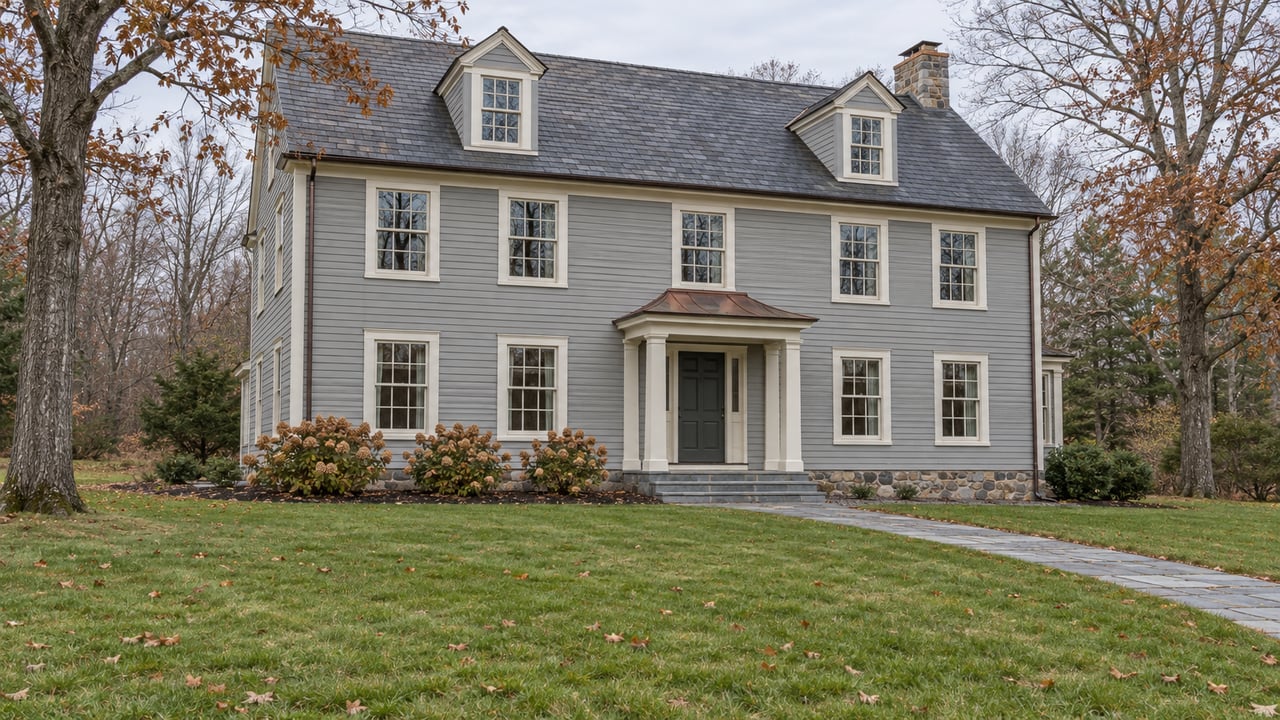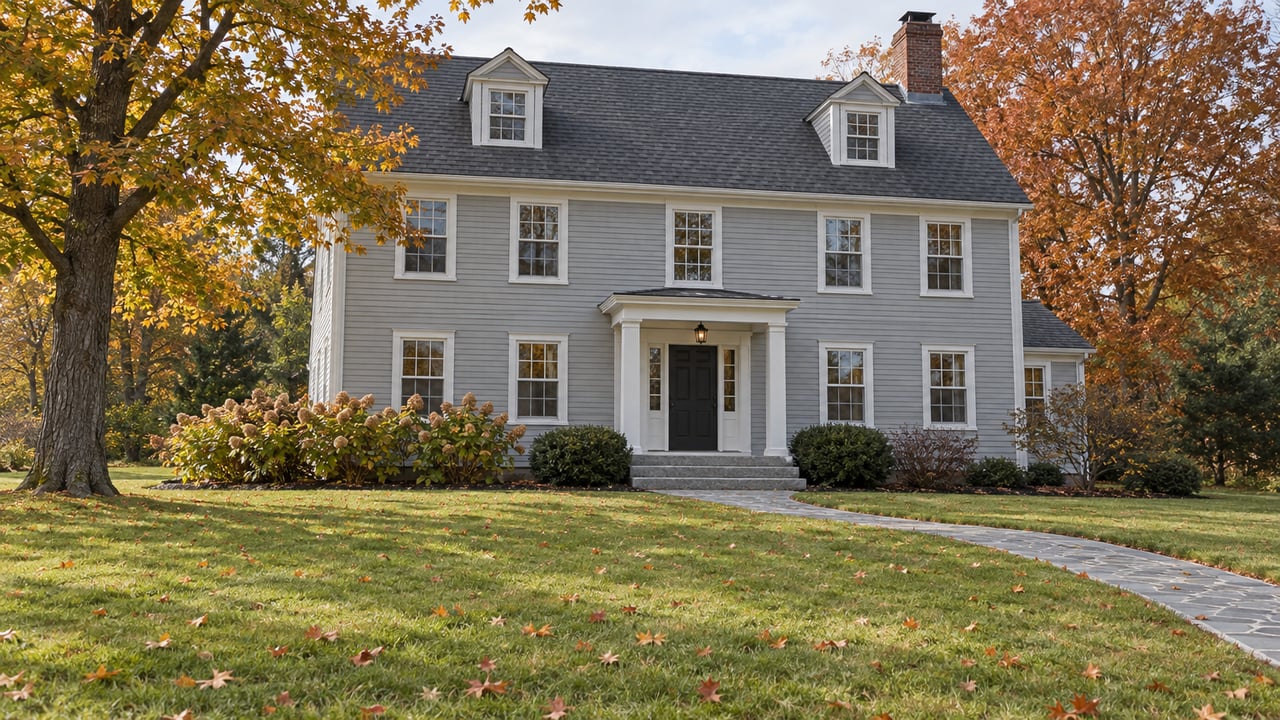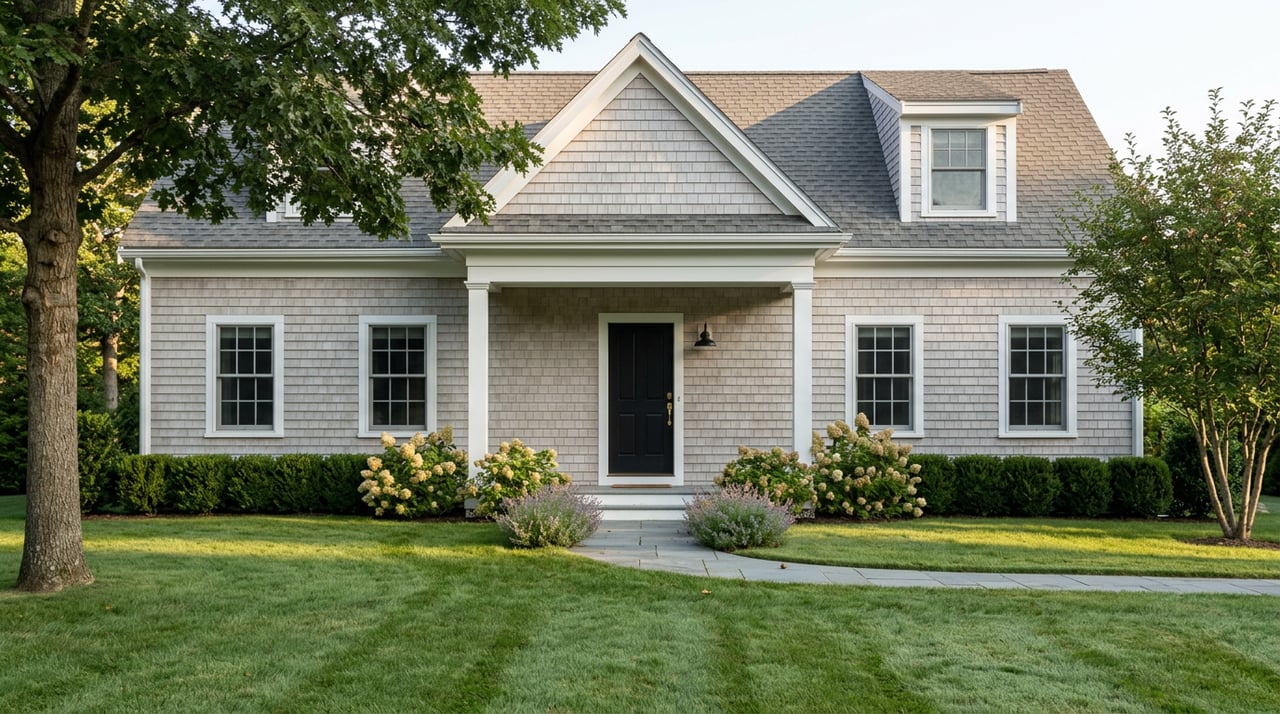
Drive down Heights Road in Darien this month and you'll pass roughly $300 million worth of construction that's gone up over the past two years, according to Yahoo News. Darien Commons is leasing up its 122 apartments. Heights Crossing finished its 65 units last fall, close enough to the platform that the developer measured the walk in seconds, not minutes. A few hundred feet away, the site once known as Heights Corners is under construction, on its way to becoming 20 more. Add it up and these projects account for more than 200 new apartments, built or under construction, most of them within easy walking distance of the Metro-North station.
If you've been comparing Darien to New Canaan or Westport and noticed all this building, you might reasonably expect it to be taking some pressure off home prices. It hasn't. Year-to-date through mid-August 2026, the median sale price in Darien's 06820 zip code reached $2.9 million, up 18.4% from the same period a year earlier, even as the total number of homes sold fell 8.2%. Prices climbing while sales volume drops isn't a contradiction here. It's the signature of a town running two separate housing markets at once, and only one of them is actually growing.
Two Markets, One Zip Code
The apartment boom and the for-sale market don't compete for the same buyers, because they're not selling the same thing. Every one of the new Noroton Heights buildings is rental. Darien Commons, owned by Federal Realty Investment Trust, was built on the former Stop & Shop and Walgreens site specifically as mixed-use rental and retail. The Darien Times reported that Heights Crossing, developed by V20 Group, opened with 65 apartments (10 of them designated affordable under the town's inclusionary zoning rules) and roughly 30,000 square feet of ground-floor retail, all of it a short walk from the train station. None of it added a single lot where a house could be built.
That distinction matters more than it sounds like it should. A renter moving into a one-bedroom at Everly Darien and a family shopping for a four-bedroom colonial under $2 million are drawing from entirely different pools of supply. The apartment construction has genuinely changed what Noroton Heights looks and feels like, new sidewalks connecting the train station to the retail strip, restaurants filling storefronts that sat empty for years. What it hasn't touched is the inventory of single-family homes for sale, which is where the actual scarcity lives.
Where the Actual Shortage Lives
Look at how Darien's single-family market broke down by price band in the first quarter of 2026, and the picture gets specific fast.
| Price Band | Closings | Days on Market | Sale-to-List Ratio |
|---|---|---|---|
| $1M–$2M | 8 | 30 | 103.7% |
| $2M–$3M | 5 | 64 | 103.1% |
| $3M–$4M | Doubled year over year | 24 | 111.9% |
The $3M to $4M bracket is where the real heat shows up: closings roughly doubled from the year before, homes moved in 24 days, and buyers paid nearly 12% over asking on average. That's not a market cooling under new supply. That's a market where a specific, well-defined slice of buyers is competing hard for a small number of listings that new apartment construction was never going to add to.
Separate market data from April 2026 put the townwide median at $2,015,000, with homes closing at 104.3% of list price and just 1.3 months of inventory on the shelf. The most actively contested price range in that report wasn't the ultra-luxury tier. It was homes between $1.4 million and $1.7 million, exactly the entry-level band that's grown hardest to find. Finding a single-family home under $2 million in Darien has become genuinely difficult, and that scarcity, not a broad housing shortage, is what keeps pulling the townwide median upward even as fewer total homes change hands.
Noroton's Preview of What Scarcity Looks Like
If you want to see where this pressure lands hardest, look at Noroton, the neighborhood sitting closest to that same Heights Road construction zone. In 2025, Noroton logged 29 closings at a median price of $1.938 million, with a sale-to-list ratio of 110.6% and homes averaging just 22 days on market. Sellers there had roughly a 96.7% chance their home would sell, among the strongest odds recorded across Darien's neighborhoods that year.
Noroton sits right at the price point that's disappearing everywhere else in town. It's a preview of what the rest of Darien's entry tier is likely to look like as that band keeps shrinking: fast sales, bidding above ask, and very little room for buyers to negotiate on price once a home is fairly priced.
The Downtown Side of the Same Story
A mile or so from Heights Road, downtown Darien is going through its own transformation, and it tells a related but distinct story. The Corbin District, Baywater Properties' second-phase redevelopment along Boston Post Road, is on track to open new businesses this summer and welcome residents to more than 100 new apartments this fall. Developer David Genovese has been public about the leasing strategy: retail commitments are near 80%, with new arrivals including Corsica wine bar, the Japanese restaurant Hinoki, Nantucket import Millie's, and a flagship location for Tuckernuck, plus office tenants like McKinsey & Co.
It's a genuine downtown refresh, and it's easy to read as evidence the whole town is loosening up. But like Noroton Heights, the Corbin District is adding apartments and storefronts, not single-family lots. Downtown Darien is getting more vibrant to walk through. It isn't getting easier to buy a house in.
What This Means If You're Weighing Darien Against Its Neighbors
The buyer pool driving Darien's single-family market in 2026 comes largely from two directions: New York City households making a permanent move, and current owners trading up from Norwalk or New Canaan who've built equity and are ready for the next tier. NYC relocators weighing Darien against Greenwich tend to land on Darien for its smaller scale and tighter community feel, a comparison worth keeping in mind if you're cross-shopping New Canaan or Norwalk as well.
For buyers, the apartment boom is worth knowing about mainly as a way to experience Darien before committing to a purchase, not as a sign that the for-sale market is about to loosen. If your budget sits in that $1.4 million to $1.7 million band, expect competition close to what Noroton just posted. If you're shopping above $3 million, expect speed and offers over ask to be the norm rather than the exception.
For sellers, the read is more straightforward. A correctly priced home in almost any bracket under $4 million is moving in weeks or, in some brackets, closer to two months, and the data shows buyers are not negotiating from a position of strength anywhere in this market right now.
A Few Questions Worth Asking Directly
Will any of the new Noroton Heights apartments eventually become homes for sale? Not under current plans. Every project approved so far, Darien Commons, Heights Crossing, and the smaller Heights Corners site, was designed and permitted as rental housing.
Does building hundreds of new apartments put downward pressure on nearby home values? Not in Darien's case so far. The town's geography, bounded by Long Island Sound and neighboring communities, leaves little room to add new single-family lots regardless of how much rental construction happens near the train station. The two supply pools stay separate.
Is this a bad time to buy a house in Darien? It depends on price point and patience. Homes are closing fast and often above list, which rewards buyers who are pre-approved and ready to move quickly rather than negotiate slowly.
If you're trying to figure out where your budget actually lands in a market moving this fast, Lauren Parr Homes can walk you through what's realistic in Darien right now, house by house, price band by price band. Start with a complimentary home valuation to see where your own numbers fit into this picture.