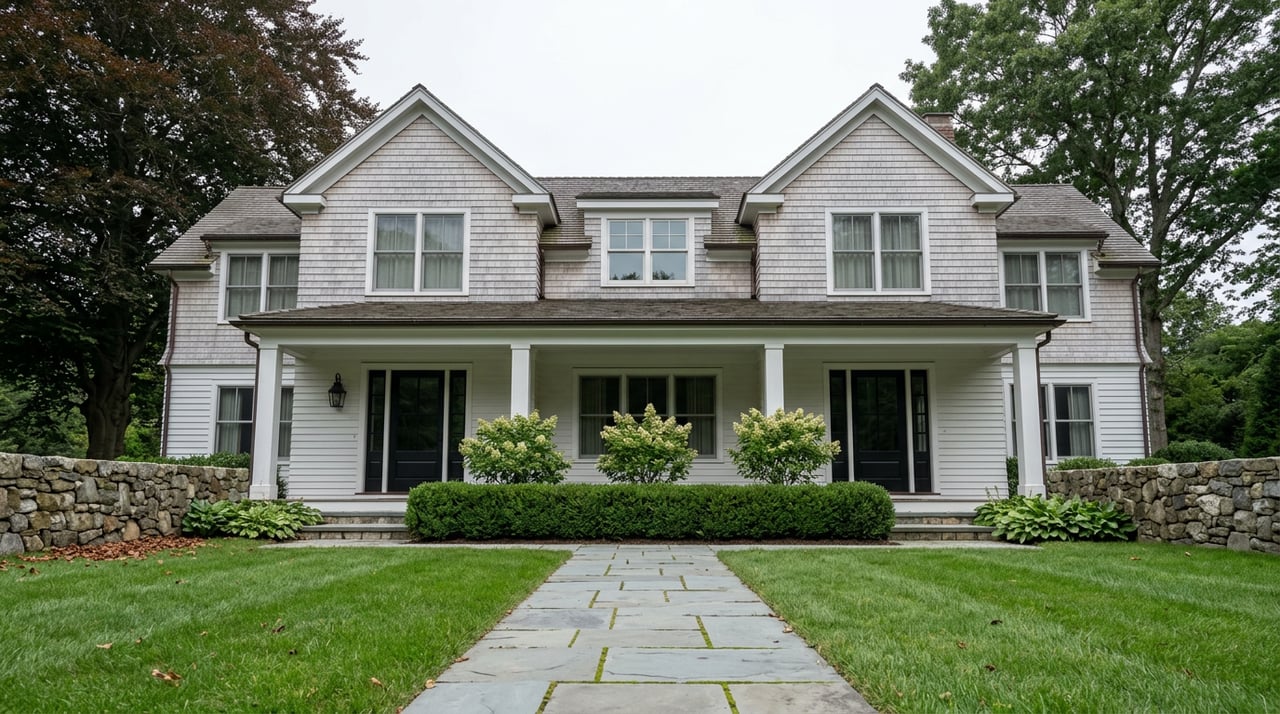
A house on a two-acre lot in Greenfield Hill and a house three blocks from the harbor in Southport can carry the same asking price and share almost nothing else. Different lot sizes, different commutes, different reasons a buyer picked up the phone. Yet both get folded into the same headline number every time someone quotes "Fairfield's median home price." That number, sitting at $1.135 million in August 2026 according to SmartMLS data reported through a regional real estate column, up 23 percent year over year, is real. It is also close to useless if you're trying to figure out which of Fairfield's two premium neighborhoods actually fits what you want.
The town median treats Fairfield as one market with one story: prices are up, inventory is tight, demand from New York keeps flowing in. All true. But Greenfield Hill and Southport got expensive for opposite reasons, and understanding the difference tells you more about your own search than the median ever will.
One Town, Two Premiums
Start with what the median is actually averaging together. William Raveis put Fairfield's median sale price at $1,131,750 as of July 2026, with the single-family figure running a bit higher at $1,190,000. That number blends starter colonials near the train stations, mid-century ranches off Black Rock Turnpike, and the two neighborhoods this piece is about. When a brokerage's year-end review of 2025 broke Fairfield down by section, the divergence underneath that blend was stark: Southport's prices climbed roughly 40 percent that year alone, while Fairfield's Town Center and Stratfield sections posted far more modest gains over the same period. A median that smooths over a 40 percent outlier isn't describing a market. It's averaging two of them.
Here's how the two neighborhoods actually compare on the specifics that matter to a buyer choosing between them.
| Greenfield Hill | Southport | |
|---|---|---|
| Character | Inland, rural, colonial farmland roots | Coastal, walkable, protected historic village |
| Typical price range | Roughly $1.1M to $2.5M, with larger estates well above | Averaging $1.51M as of May 2026, up 7.6% year over year |
| Train access | None on-site; 10 to 15 minute drive to Fairfield or Fairfield Metro stations | Its own Metro-North station, roughly 70 to 95 minutes to Grand Central on express service |
| What limits new supply | Large-lot zoning, typically two or more acres | National Register historic district with design review |
| Signature landmark | Greenfield Hill Congregational Church, founded 1725 | Pequot Yacht Club, founded 1920, on Southport Harbor |
| Signature annual event | Dogwood Festival, held its 89th year in May 2026 | Southport Garden Stroll and Blessing of the Fleet |
The prices sit in overlapping ranges. The mechanisms that produced them do not.
Why Greenfield Hill Costs What It Costs
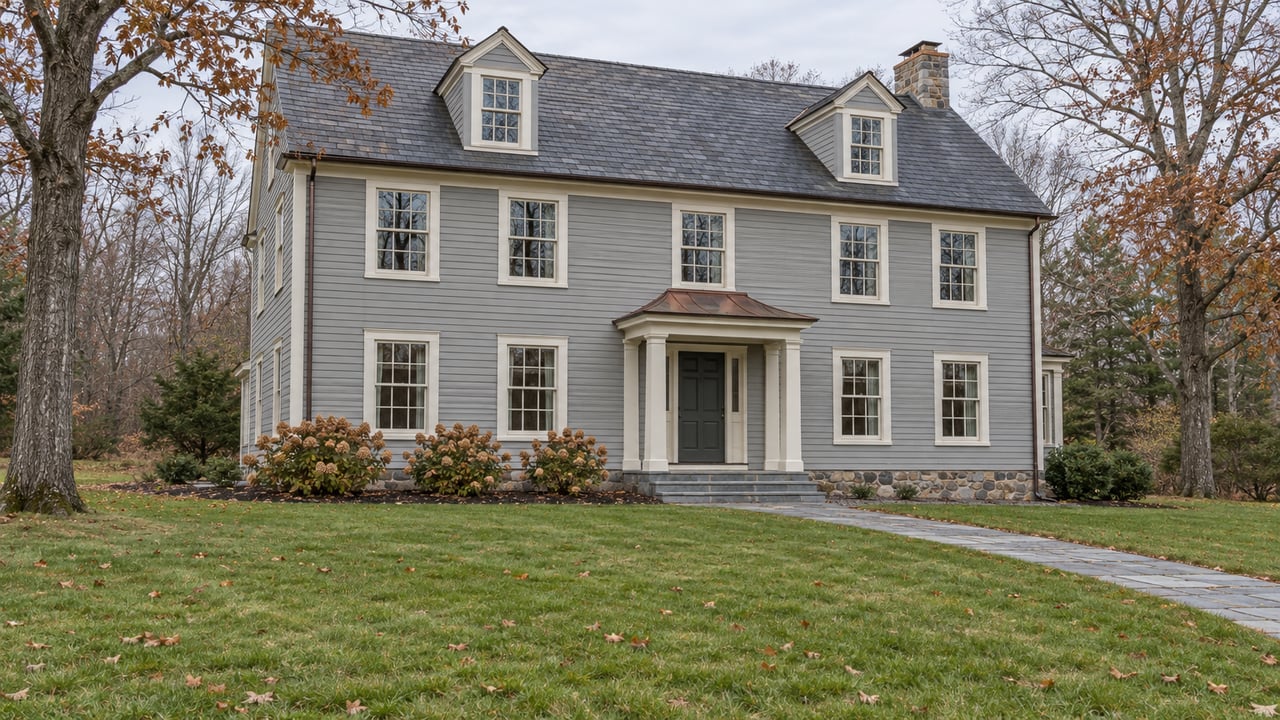
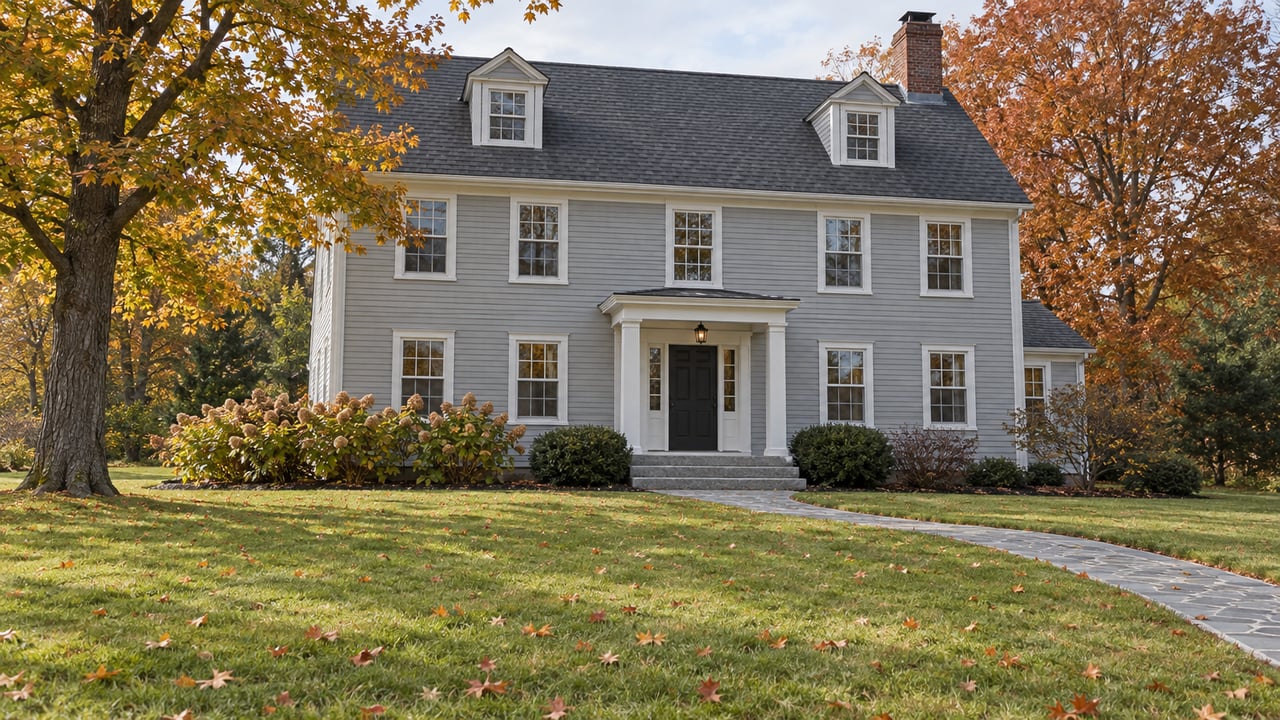
Greenfield Hill's premium is a land premium, plain and simple. Two years ago, when a local brokerage last measured the gap, Fairfield's town-wide median single-family sale price sat near $850,000 while Greenfield Hill properties were transacting between $1.1 million and $2.5 million, a spread that runs 15 to 20 percent above the town median on a price-per-square-foot basis. You are not paying for square footage here. You are paying for the zoning that keeps lots at two acres or more, for stone walls and setbacks that make it hard to see a neighbor's roofline, and for a street pattern that has stayed essentially rural while the rest of the county filled in around it.
The tradeoff is transportation. Greenfield Hill has no train station of its own. Residents drive ten to fifteen minutes to either the Fairfield or Fairfield Metro stop, a detail that barely registers for someone who works from home three days a week and matters quite a bit to someone commuting to Midtown five days a week. The neighborhood's anchor, the Greenfield Hill Congregational Church, has stood on the hilltop green since 1725, and its Dogwood Festival, which marked its 89th year this past May, still draws crafters and visitors from across Fairfield and New Haven counties every spring when the dogwoods along the surrounding roads bloom. That kind of continuity, a church green that has looked roughly the same for three centuries, is part of what buyers are actually purchasing when they pay the Greenfield Hill premium. It is a premium on permanence, not on proximity to anything.
Why Southport Costs What It Costs
Southport's premium runs on the opposite mechanism. This is not a village with room to grow. The entire historic center sits inside a local historic district listed on the National Register of Historic Places, which means new construction and even significant renovation go through design review before they happen. The supply of buildable, alterable inventory is capped by policy, not just by geography, and that cap is enforced actively. Fairfield's Historic District Commission had a hearing scheduled this month to review demolition proposals affecting five properties in the district, including one at 669 Harbor Road owned by Pequot Yacht Club itself. Even a century-old institution with deep roots in the village has to bring its plans before a commission. That is what a scarcity premium looks like in practice, not as an abstraction but as a public hearing with an agenda and an address.
What that scarcity protects is a genuinely different lifestyle than Greenfield Hill offers. Southport has its own Metro-North station, putting Grand Central roughly 70 to 95 minutes away on express service without a drive to another town's platform. The village center is walkable to the Pequot Library, a community anchor that hosts concerts and one of the largest summer book sales in New England, to The Delamar Hotel, and to Sasco Beach a short distance south of the harbor. Two churches, Southport Congregational and Trinity Episcopal, run the same kind of long-running community calendar Greenfield Hill's church does, including the annual Garden Stroll and Blessing of the Fleet. As of May 2026, Zillow tracked Southport's average home value at $1,508,142, up 7.6 percent over the prior year, a figure that sits well above the town median precisely because there is no realistic way to add meaningful new inventory to a protected half-square-mile of harbor village.
The same distinction between a headline rate and an individual tax bill matters here. Fairfield's mill rate dropped from 28.39 to 19.19 for the July 2026 tax year after a state-mandated revaluation. That looks like a tax cut on paper. It isn't one. Assessed values rose across town to reflect the current market, and the rate came down to offset that increase, which means whether any individual owner's bill actually goes up or down depends entirely on how that specific property revalued against everyone else's. And just as the mill rate alone doesn't tell an owner what they'll owe, the town median alone doesn't tell a buyer what either neighborhood offers.
Two Products, Not One Ladder
It's tempting to think of Fairfield's neighborhoods as rungs on a single ladder, with Town Center at the bottom and Greenfield Hill or Southport at the top. The data doesn't support that shape. These are two parallel premium categories built around different bets on what daily life should look like, and the buyer pools barely overlap. A family that wants acreage, quiet, and a three-century-old church green isn't cross-shopping a walkable harbor village with its own train stop. A household that wants to leave the car in the garage and walk to the library isn't going to settle for a ten-minute drive just to catch a train.
That matters for how you actually search. If you're comparing Fairfield to Westport or Darien on price alone, you're already missing the more useful comparison, which is Fairfield against itself. Decide first whether you're buying land and permanence or walkability and access. Once you know which mechanism you're paying for, the number on the listing starts to make a lot more sense.
A Few Questions Worth Asking Directly
Is Southport its own town? No. It's a village within Fairfield, right on the Westport border, which means residents get Fairfield's tax rate, beaches, and municipal services while living inside a distinct historic district.
Does Greenfield Hill have any train access? Not directly. Residents drive to either the Fairfield or Fairfield Metro station, a trip of roughly ten to fifteen minutes depending on the specific address.
Why did Southport's prices rise so much faster than the rest of Fairfield? The historic district caps how much new inventory can ever come to market there, so even modest increases in demand show up as outsized price moves compared to neighborhoods where builders can still add supply.
If you're weighing Fairfield's neighborhoods against each other, or against towns further up the county, the right first move is figuring out which premium you're actually willing to pay for. Lauren Parr Homes works both sides of that decision every week, from Greenfield Hill's acreage to Southport's harbor streets. Take a look at the full Fairfield neighborhood guide or get your instant home valuation to see where your own property sits against these two very different markets.
This article is general information, not legal, tax or financial advice. Consult a qualified professional about your situation.